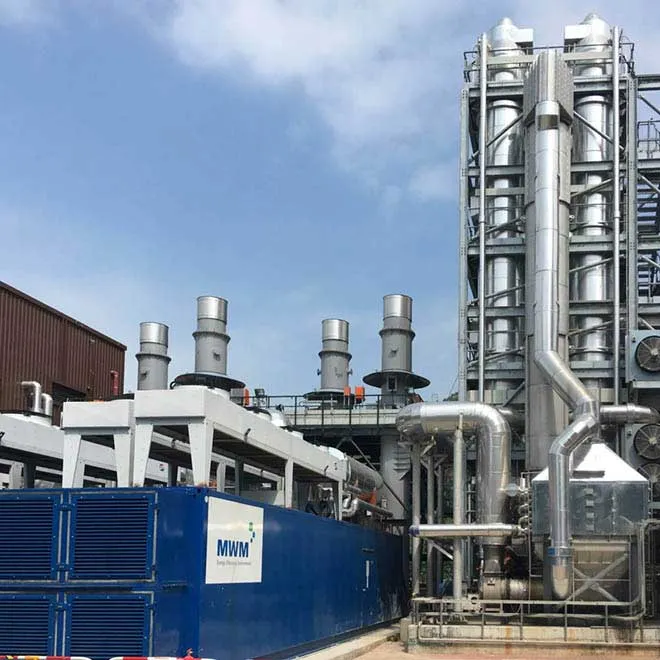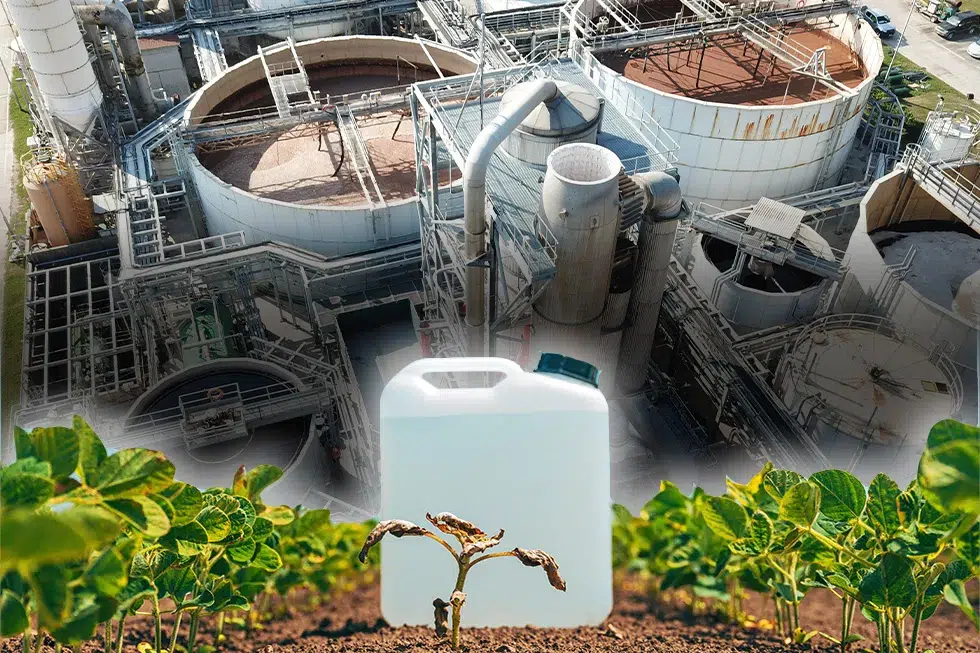
Most ammonia recovery technologies that go beyond thermal destruction use acid absorption to produce ammonium sulfate. OTAR® Variant 2 does not. That single design decision opens a product category that acid-route systems simply cannot access.
Why Conventional Systems Use Acid — and the Consequences
What OTAR® Variant 2 Does Instead
OTAR® Variant 2 absorbs the ammonia gas stream into clean water, producing ammonium hydroxide (aqueous ammonia) directly. It needs no sulfuric acid and produces no ammonium sulfate salt. In addition, the process requires no acid storage, secondary containment, or hazardous-chemical training for corrosive acid. The absorbed product (typically 20–25% NH₃) is clean and consistent. Where certified, it’s eligible for use in OMRI-listed organic production systems. This simplicity is both an operational advantage and a commercial one.
OMRI Certification: What It Is and Why Buyers Care
Beyond Agriculture: Multiple Offtake Routes
OTAR® Variant 2’s ammonium hydroxide product is not limited to agriculture.
Established industrial markets include:
- pH control and chemical manufacturing, where ammonium hydroxide is a widely used reagent
- Selective catalytic reduction (SCR) for NOx control in power generation and heavy industry
- Municipal wastewater treatment, where it supports nitrification and chloramination dosing
- Refrigeration and the emerging hydrogen carrier economy, once further concentrated to anhydrous ammonia
- Multiple offtake routes from a single production system provide important commercial resilience.
The Operational Simplicity Benefit
Eliminating acid from the process has direct operational benefits beyond product quality. There is no acid procurement, no specialist storage infrastructure, no secondary containment required for acid, and no acid-specific hazardous-chemical procedures. This simplifies maintenance, improves the site safety profile, and makes the system easier to operate reliably. Therefore, for facilities that previously dismissed ammonia recovery over acid-handling complexity, OTAR® Variant 2 removes that barrier entirely.
Which U.S. Operators Get the Most Value From This Product?
OMRI-listed ammonium hydroxide isn’t equally valuable to every operator — the offtake route that matters most depends on what your facility already buys, sells, or discharges:
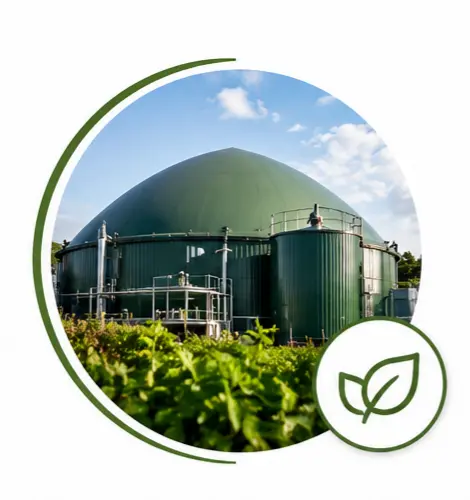
Commercial AD & Biogas Developers
Developers selling digestate or co-products into organic-certified supply chains gain a fertilizer output that clears a certification hurdle acid-route systems can’t — turning a compliance stream into a premium-market product.
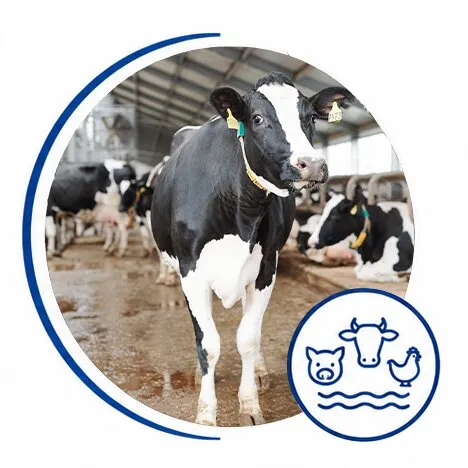
Large-scale dairy & swine CAFOs
Operations transitioning acreage to organic, or supplying organic dairy and livestock programs, can apply recovered ammonium hydroxide directly on-farm or move it through agricultural cooperatives as a certified input.
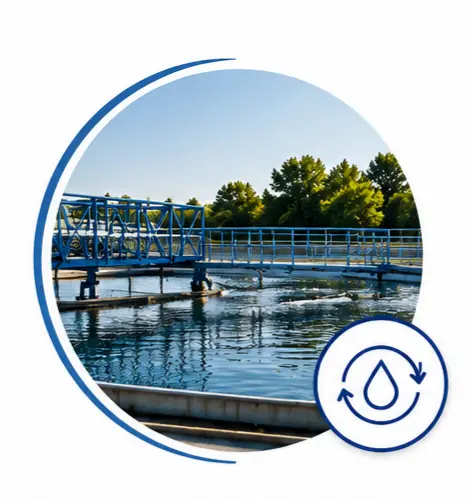
Municipal wastewater treatment plants (WWTPs)
Many plants already purchase aqueous ammonia for chloramination and pH control. On-site OTAR® recovery can offset that procurement cost directly, or generate incremental revenue by supplying nearby plants with excess volume.
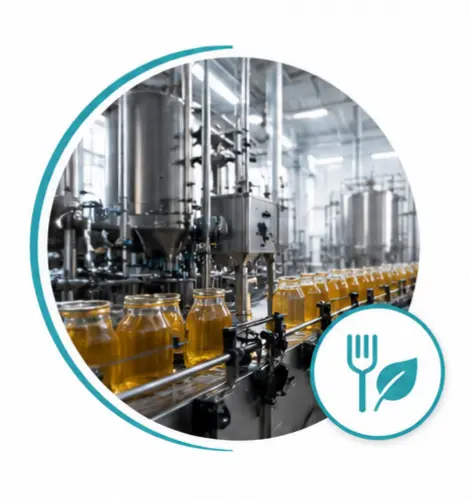
High-protein food & beverage processors
Meat and dairy plants running ammonia-based refrigeration systems can potentially offset refrigerant procurement, in addition to cutting the high-strength nitrogen surcharges tied to discharge.
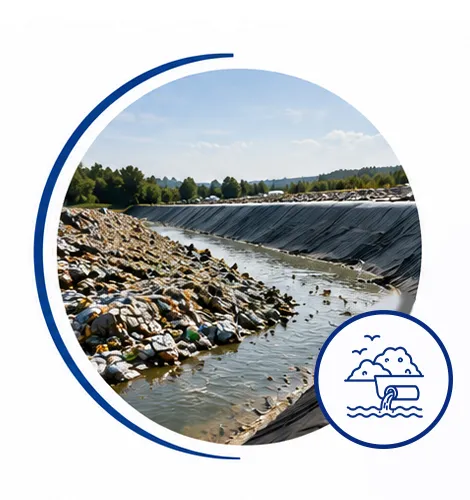
Solid waste & landfill operators
Where the primary driver is compliance rather than product sale, a clean, sellable ammonium hydroxide byproduct still adds incremental value to a leachate treatment investment that would otherwise be a pure cost center.
OTAR (Organics Thermal Ammonia Recovery)
OTAR® (On-Site Thermal Ammonia Recovery) is a modular platform with over 20 years of operational experience and proven installations across Asia and the UK, with growing adoption across the United States. For operators currently spending on biological nitrogen removal, Variant 2, water absorption, is usually the most commercially attractive option. It converts a treatment cost into ammonium hydroxide revenue, with no acid supply chain, no salt production, and no hazardous chemical handling. Where waste heat isn’t available, however, Variant 4’s heat recycling system still achieves a coefficient of performance exceeding 15, making thermal stripping viable even from cold electricity.