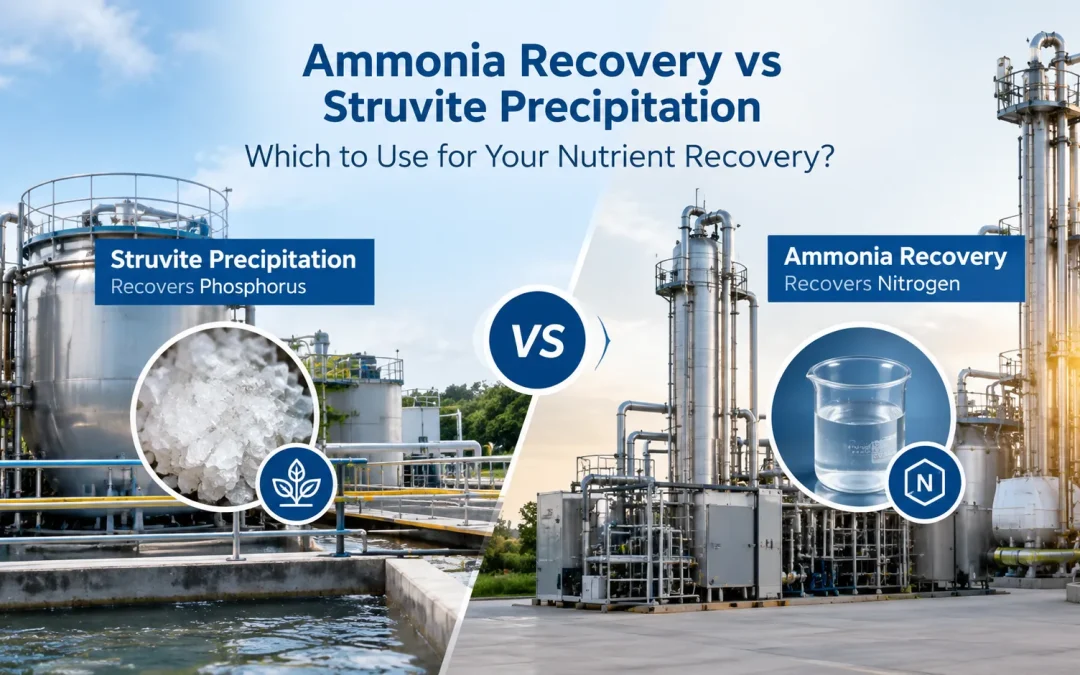
Struvite mainly recovers phosphorus, while OTAR® mainly recovers nitrogen. For most high-TAN streams, the two technologies complement each other rather than compete. However, understanding the difference prevents expensive mistakes in technology selection.
Many operators of wastewater and digestate plants consider struvite precipitation for nutrient recovery. However, choosing between ammonia recovery vs struvite precipitation depends on what each technology actually removes. This article explains when struvite is the right choice and when OTAR® is preferable. It also shows how the two can work together on complex streams.
What Is Struvite Precipitation?
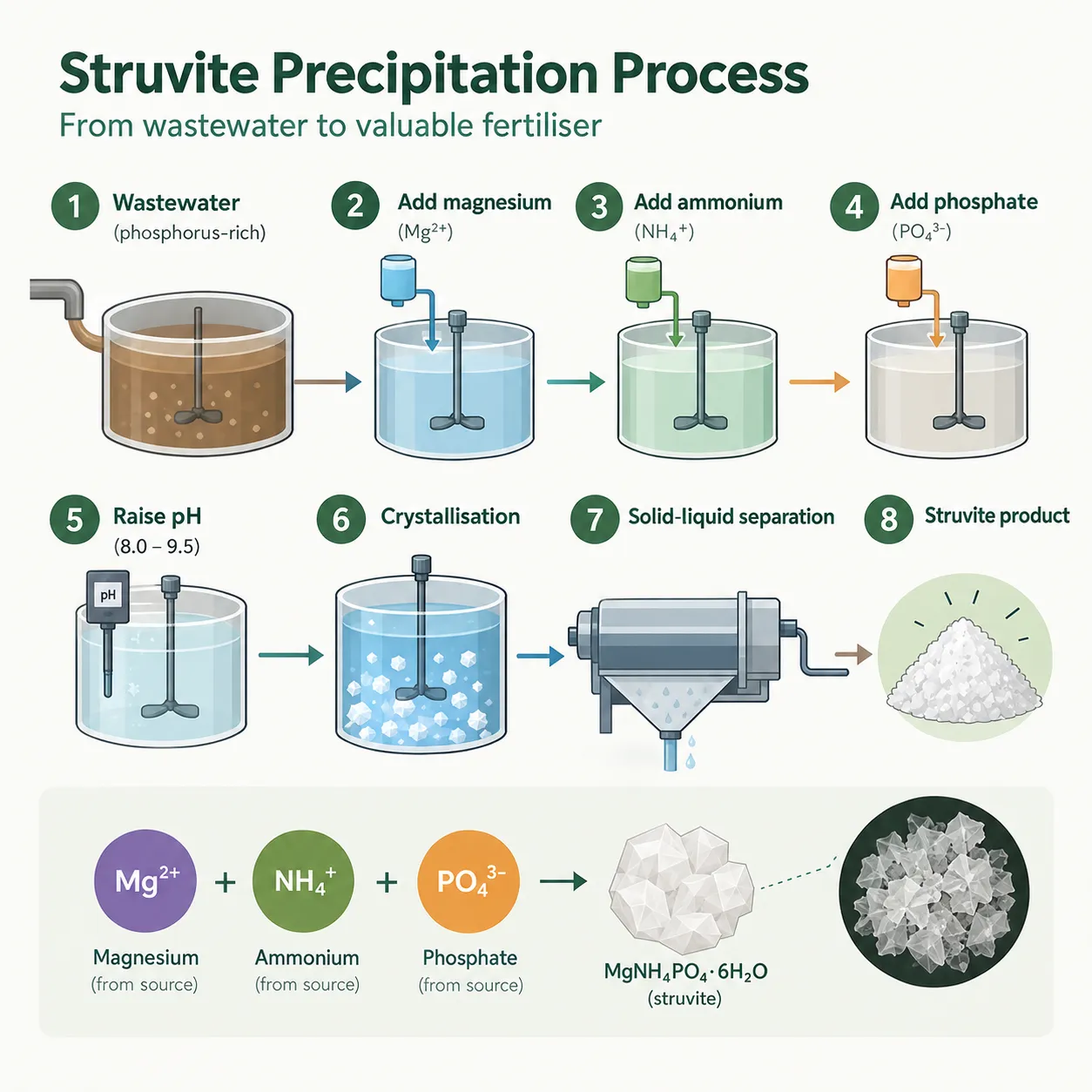
Struvite is magnesium ammonium phosphate (MgNH₄PO₄·6H₂O), a slow-release fertilizer mineral. It crystallizes when magnesium, ammonium and phosphate meet in the right proportions at elevated pH. Precipitation works best on phosphorus-rich streams, typically sewage sludge digestion liquors and food processing effluents. In addition, the product has strong agronomic properties and good market acceptance.
Where Struvite Has Limits
Struvite precipitation is primarily a phosphorus recovery technology. In a typical stream, it removes only 10 to 30% of ammoniacal nitrogen. The reason is stoichiometry, because the reaction needs equimolar phosphate.
However, most high-TAN streams carry far more nitrogen than phosphorus. Examples include digestate reject water, landfill leachate and food processing effluents. As a result, substantial ammonia remains after precipitation and needs further treatment.
When OTAR Is the Right Choice
OTAR® suits high-TAN streams regardless of their phosphorus concentration. It fits best where the main challenge is ammonia compliance or nitrogen value recovery. Moreover, OTAR® delivers 85 to 99% nitrogen removal efficiency, far above struvite. It also does so at comparable or lower cost per metric ton of nitrogen recovered. In addition, OTAR®’s modular variants adapt to the energy and product market available at each site.
Combined Approaches
Some streams, such as certain sewage sludge liquors, carry both high TAN and high phosphorus. For these streams, a combined approach is often best. First, struvite precipitation recovers phosphorus and a fraction of the nitrogen. Then, OTAR® removes the remaining ammonia load. Organics USA can design integrated treatment trains for complex stream compositions. Therefore, the key is sequencing the technologies to tackle both nutrients efficiently, rather than choosing one.
Which U.S. Operators Should Consider Each Approach?
The right answer depends on your stream’s nitrogen-to-phosphorus balance and on which nutrient your permit or product market cares about most:
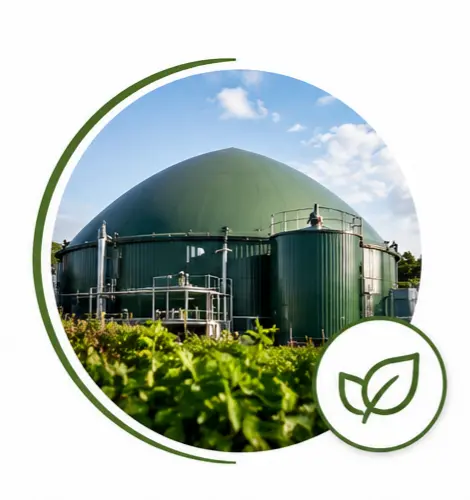
Commercial AD & Biogas Developers
Digestate reject water is typically nitrogen-heavy. OTAR® is usually the primary technology, protecting digesters from ammonia inhibition and producing a sellable ammonium product.
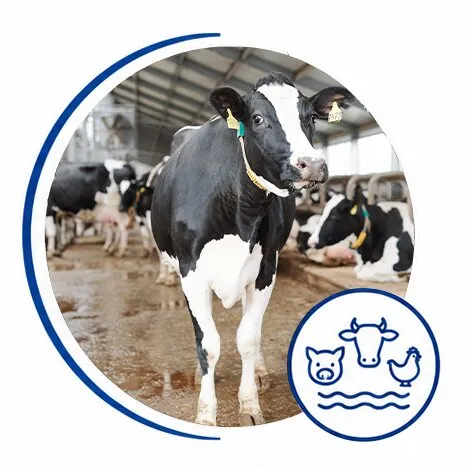
Large-scale dairy & swine CAFOs
Manure carries both nitrogen and phosphorus, and many states apply phosphorus-based land-application limits. A combined train — struvite for phosphorus, OTAR® for nitrogen — can address both constraints and create two marketable products.
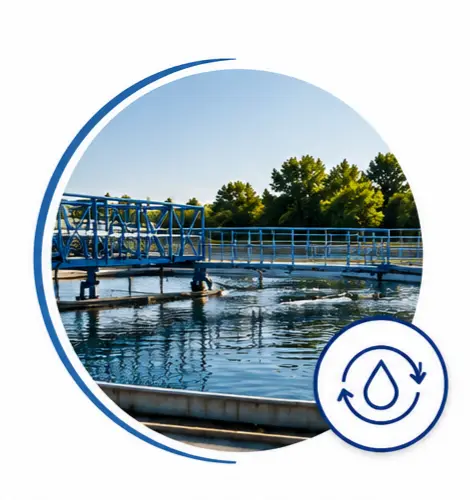
Municipal wastewater treatment plants (WWTPs)
Plants facing phosphorus limits often start with struvite on sludge digestion liquors. Because that step leaves most of the ammonia behind, OTAR® on the remaining centrate handles the nitrogen load before it returns to the head of the works.
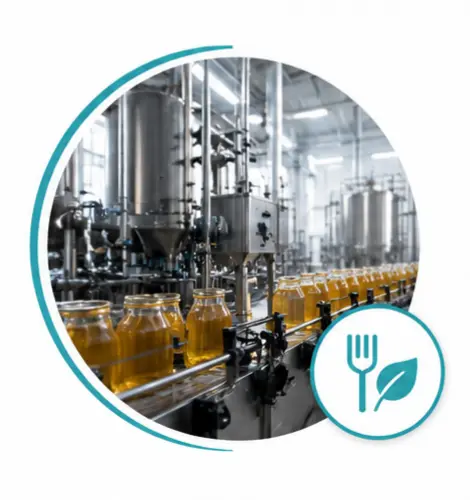
High-protein food & beverage processors
Protein-rich effluents are dominated by ammoniacal nitrogen. OTAR® typically leads here, cutting surcharge exposure, with struvite added only where phosphorus is also a discharge concern.
Solid waste & landfill operators
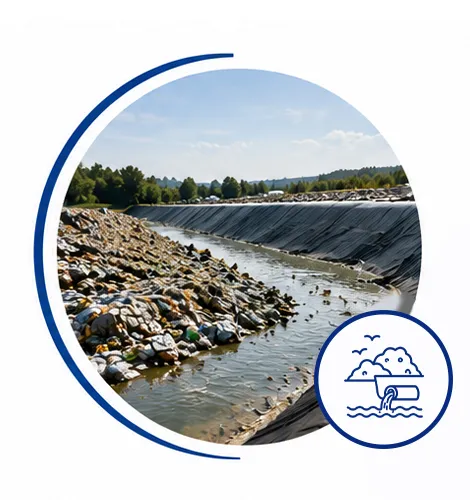
Leachate carries far more nitrogen than phosphorus, so struvite offers little. OTAR® is the better fit for persistent leachate TAN.
Should I use ammonia stripping or struvite precipitation or nutrient recovery?
Choose struvite precipitation when phosphorus recovery is the main goal. In contrast, OTAR® thermal ammonia stripping suits streams where ammonia compliance or nitrogen recovery matters most. Finally, for streams with high TAN and high phosphorus, use struvite first and OTAR® second.
Estimate Your Own Payback
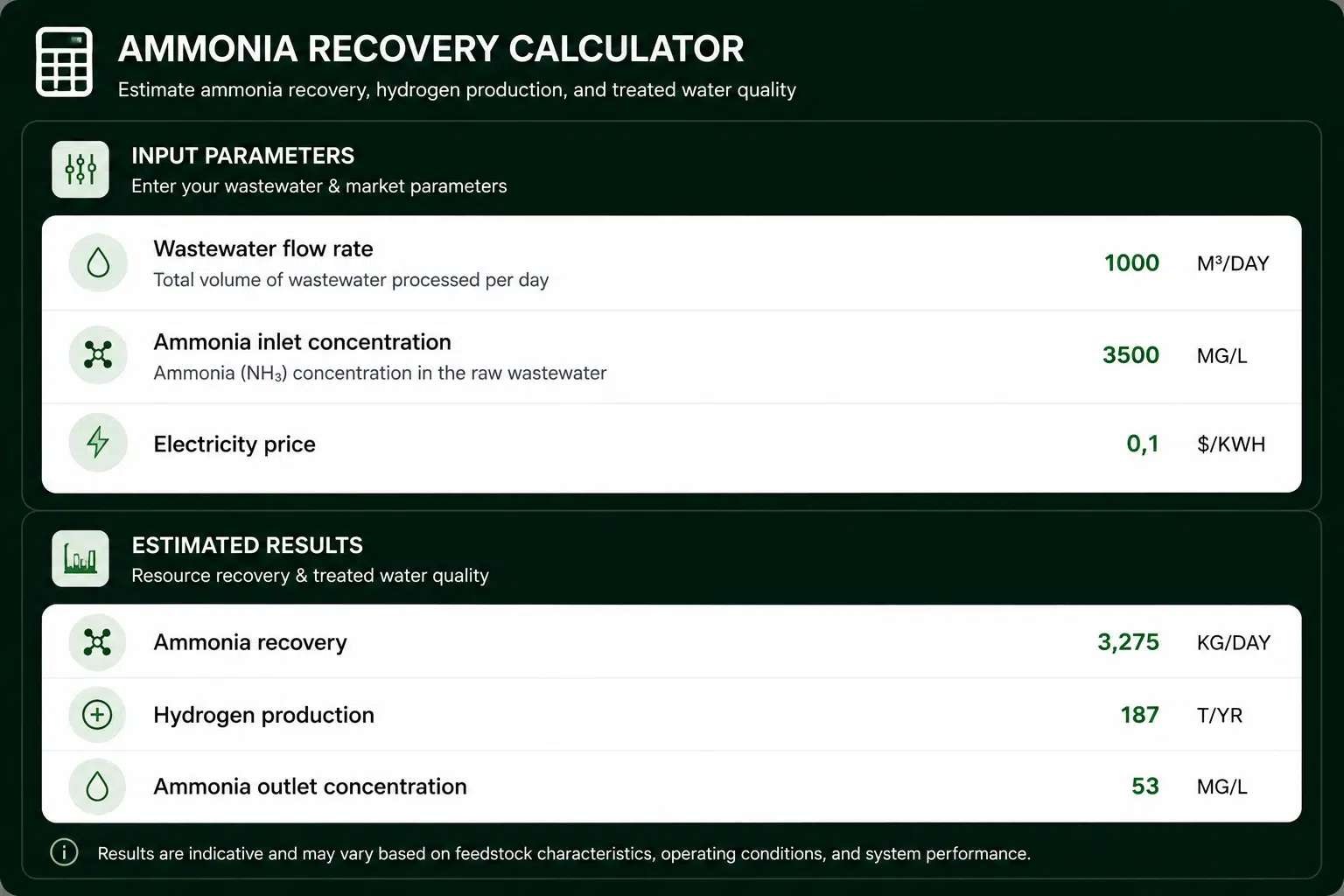
Evaluate the potential to recover ammonia and produce hydrogen while understanding the energy requirements and economics of your wastewater treatment process.
Free • Preliminary Estimate • No Commitment
The OTAR Approach
OTAR (Organics Thermal Ammonia Recovery)
OTAR is a modular platform with over 20 years of operational experience and proven installations in Asia. For operators currently spending on biological nitrogen removal, the most commercially attractive configuration is Variant 2. Which is the water absorption that converts a treatment cost into ammonium hydroxide revenue with no acid supply chain, no salt production and no hazardous chemical handling. Where waste heat is unavailable, Variant 4’s heat recycling system achieves a coefficient of performance exceeding 15, making thermal stripping viable even from cold electricity.